
August 16, 2025
Rotary Nozzles (MP-Style Rotators): When, Why, and How to Use Them in North Texas
If you’ve ever watched your sprinklers “mist” into the wind or run off down the driveway, you’ve seen water (and money) disappear. Rotary nozzles—often…
If you’ve ever watched your sprinklers “mist” into the wind or run off down the driveway, you’ve seen water (and money) disappear. Rotary nozzles—often called MP-style rotators— are a simple upgrade that can fix a lot of that waste while improving coverage.
Below is a plain-English guide to what they are, when to use them, and what to expect if we retrofit your system.
What Are Rotary Nozzles?
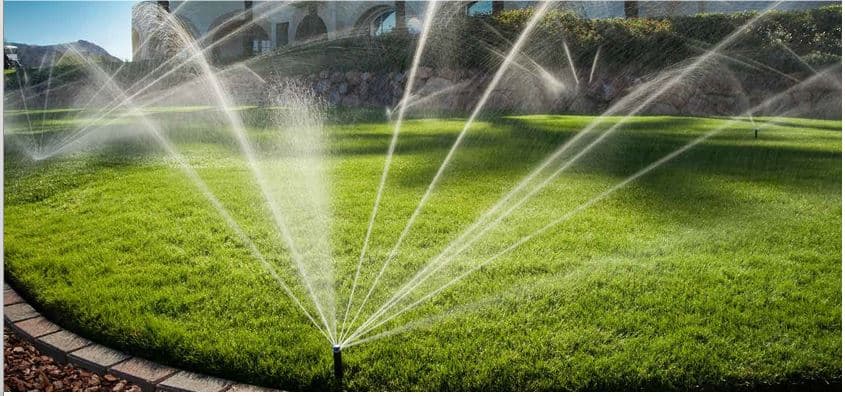
Rotary nozzles are multi-stream, low-precipitation nozzles that screw onto a standard spray body (the same pop-up you already have). Instead of a fine mist, they throw multiple rotating streams of water. Compared to traditional spray nozzles, they:
Apply water more slowly so soil can absorb it (less runoff)
Throw farther than most sprays while keeping a tighter pattern
Handle wind better than a misting spray
Are designed with matched precipitation rates for more even watering
Where Rotary Nozzles Shine
Use rotary nozzles when you want efficiency + uniformity on small-to-medium turf areas:
Clay soils & slopes: Lower application rate = less runoff
Windy, hot days: Streams hold together better than a mist
Mixed lawn shapes: Models cover ~8–35 ft with arc options for corners, strips, and full circles
Retrofits: They screw onto most existing spray bodies (we still check pressure/filters)
When they’re not ideal
Very narrow strips (<6–8 ft)—a specialty strip nozzle or drip is better
Huge fields (30–50+ ft radius)—gear-driven rotors make more sense
Mixed zones with old sprays: don’t mix head types on the same zone
Controller Changes: Expect Longer (But Smarter) Run Times
Rotary nozzles water slower on purpose. That means the controller runs longer to deliver the same amount of water—but with far less waste.
Easy starting points for summer (tune to your yard):
Rotary nozzle turf zones: 2 cycles of 12–25 minutes, 2–3 days/week
Use Cycle & Soak: add a 30–60 minute soak between cycles so water sinks in
Keep early-morning watering (roughly 2–6 AM) to beat heat and wind
Pressure & Filtration (Quietly Critical)
Rotary nozzles need the right pressure at each head to perform. We’ll:
Measure zone pressure (not just at the meter)
Upgrade to pressure-regulated pop-ups when needed (consistent streams, less misting)
Clean or add screens/filters and flush lines—small debris can weaken the streams
Set head-to-head spacing per the nozzle’s rated radius for even coverage
Common Myths, Debunked
“They water more because they run longer.”
Not quite. The total water applied is actually about the same—or less—than sprays, because the lower precipitation rate reduces runoff and waste. The extra runtime simply gives your soil time to absorb what you’re paying for instead of sending it down the street.
“They won’t keep up in Texas heat.”
They do—provided the schedule, spacing, and pressure are correct. Most lawns do better with deeper, less frequent irrigation that rotary nozzles make possible.
“I can mix them with my sprays to save money.”
Don’t. Different head types put out water at different rates. Keep each zone one head type for even results.
Maintenance & Troubleshooting
Tilted or low heads → Adjust height and level so streams clear the grass
Weak or uneven streams → Check pressure, clean the screen, replace worn nozzles
Dry wedges between heads → Verify arc and radius settings; confirm head-to-head spacing
Runoff on slopes → Shorten each cycle and add an extra soak (Cycle & Soak)
Should You Switch? (Quick Guide)
You see misting, overspray, or runoff → Strong “yes”
Medium-size turf with clay soil or mild slope → Great fit
Narrow strips or huge fields → Consider other options first
Controller is confusing/outdated → Pair the retrofit with a smart controller + rain/freeze sensor for maximum savings
How We Handle a Retrofit
Walk-through & pressure check (zone by zone)
Swap nozzles and upgrade to pressure-regulated pop-ups where needed
Clean filters & flush lines
Level/aim every head for true head-to-head coverage
Program your controller for rotary runtimes and Cycle & Soak (2–6 AM window)
Test & fine-tune (and show you how to make seasonal tweaks)
Serving Fort Worth, Benbrook & Nearby Areas
If you’d like us to evaluate whether rotary nozzles make sense for your yard, we can run every zone and set the controller for the season—then handle the retrofit if it’s the right move.
We serve Fort Worth, Benbrook, and cities across Greater Fort Worth.
Ready to cut runoff and water smarter?
Send your address and a good email, and we’ll get you on the schedule.